
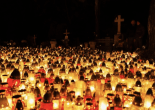
The Danger of Losing Our Humanity in Holocaust Dialogue
When discussions about the Holocaust or the Second World War become arguments over whose suffering counts and whose does not, something essential is lost. The tragedy of that era was … Continue reading
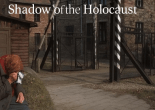
The neglected narrative: Polish Victims in The Shadow of The Holocaust
Before 1986, no American historian had written a systematic account of the Polish people under the German occupation. Prior to that time, the story of ethnic Poles had been subsumed … Continue reading

History is never that simple
Zygmunt Hauptman once accused Catholic Poland of permitting Jewish immigration centuries ago “in order to have someone to hate.” Statements like this have appeared in various writings over the decades. … Continue reading
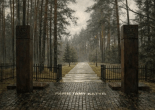
Remembering Katyń
On this day in 1940, a decision was made that would condemn thousands of Polish citizens to death and leave a scar on the conscience of Europe for generations. On … Continue reading
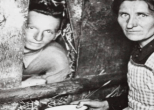
What would you do?
There are questions that are comfortable to ask from a distance and questions that become unbearable when we move them closer to home. “What would you do?” is one of … Continue reading
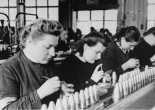
Deported for the Reich
The Forced Labor of Polish Civilians When people speak about German crimes in occupied Poland, public memory understandably moves first to ghettos and extermination camps, to places whose names have … Continue reading

The Polish Bar Association during WW2
Edward Reid Winter, Warsaw, 1940, and the German occupation authorities, already deep into the systematic dismantling of Polish civic life, demanded that the Polish Bar Association disbar its Jewish lawyers, … Continue reading
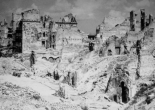
In Poland, liberation did not end so neatly…
In much of the Western imagination, the Second World War concludes in 1945 with liberation, rebuilding, and a clear moral resolution. In Poland, it does not end so neatly. It … Continue reading
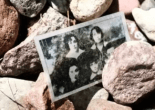
When the war ended, survival was mistaken for resolution
For millions of Polish families, liberation did not mean return. Homes had been seized, farms absorbed, workshops dismantled, furniture burned, land reassigned, records destroyed. What had taken generations to build … Continue reading

Casimir Pulaski
In 1777, a foreigner arrived on American shores with little more than a horse and a sword. By 1779, he was dead. Yet in those two years, this man changed … Continue reading



 Justice-4-Poland.com